
How to Interpret a Photography Brief | Editorial Fashion Photography
How I Interpret a Photography Brief When the Direction Isn't Clear
Some of the most useful lessons I have learned in editorial photography have come from shoots where everything appears straightforward on paper, but very little has actually been resolved.
This was one of those shoots.
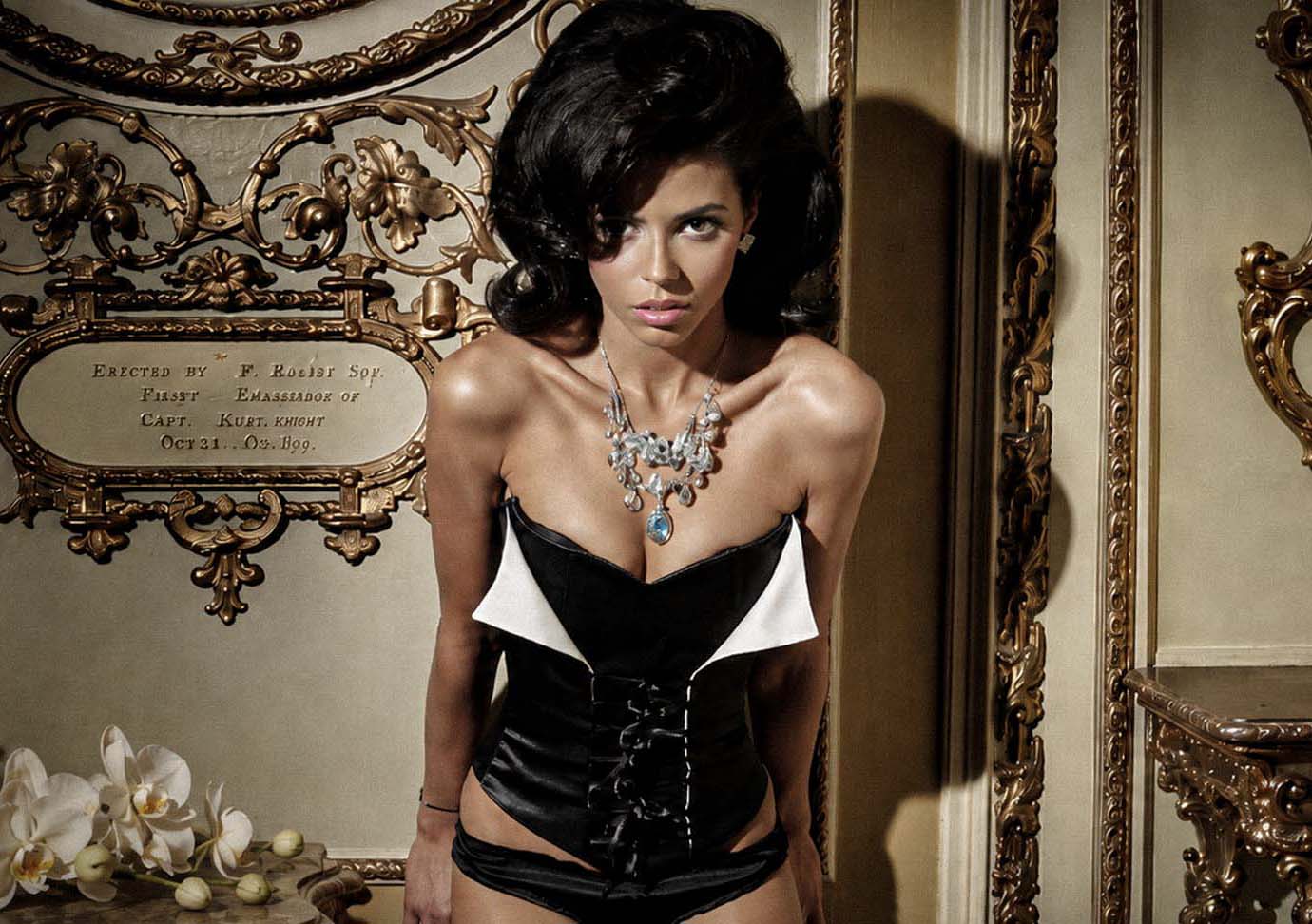
The models had travelled from agencies outside London. We had a stylist, makeup artist and assistant on set. There were eight fashion looks to photograph, limited shooting time and one location with plenty of visual character.
What we did not have was a tightly defined final layout or a rigid series of images that had already been decided for us.
That changes the photographer's role.
When the photography brief is loose, you are no longer simply executing somebody else's visual solution. You have to interpret the intention of the shoot and begin making decisions yourself.
After more than thirty years working across fashion photography, advertising and editorial commissions, I have learned that the technical part is rarely the hardest part of a day like this.
The real challenge is deciding what matters — quickly enough that the rest of the production can move with you.
“A loose photography brief doesn't remove direction. It transfers more of the responsibility for direction to the photographer.”
Interpret the Brief Before You Interpret the Picture
A useful photography brief defines an intention, but it does not always provide the finished answer. In editorial work, that space can be deliberate. It allows the photographer, stylist and creative team to respond to what is actually happening in front of them rather than simply reproduce a reference.
That is where experience begins to matter.
You have to identify which parts of the brief are fixed, which are open to interpretation and which decisions belong to you.
READING THE SPACE
The Location Came Before the Lighting
Before I set up a light, I walked through the location.
That sounds simple, but there is a considerable difference between looking at a room and seeing a location photographically.
I was looking at where the existing light fell, where it disappeared, which rooms offered depth, what happened to the backgrounds and whether the same area could support several different fashion looks without the pictures becoming repetitive.
A visually impressive room is not necessarily a useful photographic location.
Some spaces offer drama but almost no control. Others seem relatively ordinary until you recognise where the subject needs to stand, how the light will separate them and what can be excluded from the frame.
This is why location photography begins long before somebody stands in front of the camera.
I am looking at lines. Tone. Distance. Surfaces. Available light. Background separation. Where the subject can move. What the clothes will do against the room. And, just as importantly, what I can remove.
“The camera records decisions that have already been made.”
Once I had identified the strongest areas, the day became easier to organise.
Instead of inventing an entirely new idea for every outfit, I created a small number of visual environments that could evolve throughout the shoot.
That created continuity without making the pictures repetitive.
A Location Is Part of the Photograph
I have never really thought of a location as simply a background.
It affects almost every other decision. The scale of a room influences camera position and lens choice. Windows determine natural areas of brightness and fall-off. Walls, architecture and furniture determine how the eye travels through the photograph.
Strong creative direction in photography works with those characteristics rather than continually fighting against them.
One mistake is to arrive with a photograph completely constructed in your head and try to force every environment to become that picture.
Sometimes that works.
Often the result feels imposed on the location rather than belonging to it.
For this shoot I did almost the opposite. I looked at what each part of the building naturally offered and then decided which fashion looks belonged there.
That is one of the principles I return to constantly.
See the space first. Understand what is happening. Then make the technical decision.
LIGHTING WITH INTENTION
Why I Chose One Light
I photographed the shoot using essentially one directional lighting approach.
That was deliberate.
There is sometimes an assumption that more sophisticated fashion photography lighting must involve more equipment. It does not.
Lighting complexity and photographic quality are not the same thing.
I wanted a single source that would create shape, retain shadow and remain consistent enough for me to move between areas of the location without having to rebuild the visual language for each look.
A single Rembrandt-influenced source gave me what I needed.
It created structure in the face, dimension in the clothes and consistency across the series.
Most importantly, it removed unnecessary decisions.
“One light wasn't a compromise. It was a constraint I chose because it allowed me to see the subject more clearly.”
Every additional light creates another variable: position, power, modifier, balance, fall-off and its relationship to every other source.
There are productions where complex lighting is exactly the right solution. I have worked on many of them.
But complexity should solve a problem.
It should never exist simply to make a setup appear more professional.
For this editorial fashion photography shoot, a one-light photography approach gave me everything I needed.
Once the Light Was Resolved, I Could Watch the Person
Once I knew the lighting was doing its job, most of my attention moved away from the equipment.
That is where I want it.
I would rather watch the person in front of the camera than continually look at the back of a light.
Expression changes quickly. Posture changes. Weight shifts. Hands become either natural or uncomfortable. A subject can move from being self-conscious to completely convincing within a few frames.
That transition matters far more to me than another quarter-stop of light.
This is where portrait lighting and model direction photography begin to overlap.
The light shapes the person, but the photographer has to recognise how that person responds inside it.
Directing Models Isn't Really About Posing
When people talk about directing models, it is often reduced to instructions.
Turn your shoulders. Move your hand. Lift your chin. Look here. Move there.
Those instructions have their place, but direction is more subtle than a catalogue of poses.
I am constantly looking at what the subject gives back.
Some people respond well to precise direction. Others become less convincing the moment you become too specific. Some need movement. Some need conversation. Some respond to energy. Others become stronger when you stop talking altogether.
That principle eventually became the foundation of my SUBJEX™ subject-reading system.
But the idea came from years of doing exactly this: observing the person carefully enough to recognise what the photograph needs before automatically giving them another instruction.
Good Direction Eventually Becomes Invisible
There is a point where too much direction starts to weaken a photograph.
The shoulders become deliberate. The hands look placed. The face starts trying to produce the correct expression.
The subject begins performing the idea of being photographed rather than simply being present.
That is normally when I change what I am doing.
Sometimes I reduce my direction. Sometimes I introduce movement. Sometimes I begin a conversation. Sometimes I simply keep photographing and allow the person to forget about the camera for a few moments.
DECISION MAKING UNDER PRESSURE
Eight Fashion Looks Changed the Way I Used Time
Eight looks meant the clock was always present.
Not panic.
Pressure.
There is a difference.
You cannot spend forty minutes perfecting the first photograph when another seven clothing changes still have to be made.
Early decisions therefore had to be strong enough to survive the day.
This is where experience becomes useful.
You stop treating every new frame as a completely new problem.
You recognise patterns. You recognise how certain lighting behaves. You recognise which areas of a location will hold together. You recognise when the subject needs something more from you.
And sometimes you recognise that you already have the photograph and it is time to move on.
“Speed doesn't come from rushing. It comes from recognising the answer earlier.”
Pressure Reveals Your Photography Workflow
One thing I have noticed during years of commercial and fashion photography shoots is that pressure exposes whichever part of your process remains uncertain.
If you lack confidence with lighting, you continually adjust lights.
If you are uncertain about composition, you keep changing lenses or camera position.
If you are uncertain about the subject, you start over-directing.
If you do not trust the idea, you begin creating alternatives when the original may already have been working.
A strong professional photography workflow is therefore not simply about efficiency.
It is about removing enough technical uncertainty to give yourself the mental space to notice what is happening in the photograph.
Why Restraint Often Creates Stronger Fashion Photography
Looking back at this shoot, what strikes me is how little was actually required.
One location. A controlled lighting approach. A handful of useful spaces. Clear direction. Eight changes of clothes. And enough observation to know when the photograph was beginning to work.
The production itself contained far more complexity than the final images suggest.
That is exactly how I prefer it.
Photography has a strange tendency to encourage addition.
Another lens. Another light. Another modifier. Another pose. Another technique. Another frame.
Yet some of the strongest development in my own work has come from doing exactly the opposite.
Removing things.
That Eventually Changed the Way I Saw Monochrome
The same thinking eventually became part of the way I approached black-and-white photography.
Monochrome removes another variable: colour.
Once colour disappears, structure becomes harder to ignore. The relationship between highlight and shadow becomes clearer. Form becomes clearer. Separation becomes clearer. Expression can no longer hide behind colour harmony.
This is why I have never regarded monochrome simply as a conversion technique applied afterwards in Lightroom or Photoshop.
For me, it begins much earlier.
It is part of learning to recognise which visual information is actually carrying the photograph.
That thinking eventually formed part of the foundation of my Monochrome Conversion Mastery training — not as a collection of presets, but as a way of learning to see tone, structure, light and visual hierarchy before deciding what the final photograph should become.
What Do You Do When the Photography Brief Is Unclear?
If I were facing the same type of shoot tomorrow, I would approach it in almost exactly the same way.
I would not begin by creating more ideas.
I would begin by removing uncertainty.
Read the location. Identify the strongest areas. Establish the lighting. Decide what needs to remain visually consistent. Then watch the person.
Once those foundations are resolved, there is much more freedom inside the frame.
The camera can only record what you have already learned to recognise.
When I know what the light is doing, I can concentrate on expression.
When I understand the location, I can concentrate on composition.
When I understand how the subject responds, I can concentrate on the moment.
A loose creative brief does not mean working without direction. It means the photographer has to create more of that direction.
For this editorial fashion shoot, that meant reading the location, restricting the lighting, committing to decisions early and giving most of my attention to the person in front of the camera.
Do not add complexity until you understand what problem it is solving.
Questions Photographers Often Ask
What is a photography brief?
A photography brief defines the purpose, expectations, practical constraints and creative direction of a shoot. In commercial and editorial photography, however, the brief may deliberately leave room for interpretation, requiring the photographer to establish part of the visual direction.
How do photographers interpret a loose creative brief?
Start by identifying the intended outcome, then assess the location, available light, styling, subject and production limitations. Early decisions around lighting, visual consistency and direction create the framework for the shoot.
How many lights are needed for fashion photography?
There is no fixed number. Some fashion photographs require complex multi-light setups; others can be created successfully with one light. The correct lighting setup is the one that solves the visual problem without introducing unnecessary complexity.
Why is model direction important in fashion photography?
Direction affects posture, movement, expression and the emotional character of the picture. Lighting can shape a subject, but the photographer must also recognise how that person responds in front of the camera.
How do professional photographers work quickly under pressure?
Experience makes it possible to recognise familiar visual problems earlier. Reliable lighting, locations and working methods leave more attention available for timing, expression and composition.
Why is location important in editorial photography?
Location influences lighting, depth, composition, colour, texture and movement. Rather than treating it simply as a background, the photographer can use the character of the environment as part of the creative direction.
Learn to See the Photograph Before the Conversion
My approach to monochrome begins before Lightroom or Photoshop. It starts with recognising tone, structure, light, separation and visual hierarchy while the photograph is still being made.
Monochrome Conversion Mastery develops that way of seeing into a repeatable photographic process.
Explore Monochrome Conversion Mastery →
No Comments