
Pula Roman Arena – Fashion Editorial & Fine Art Shoot
Fashion Photography at Pula Arena, Croatia
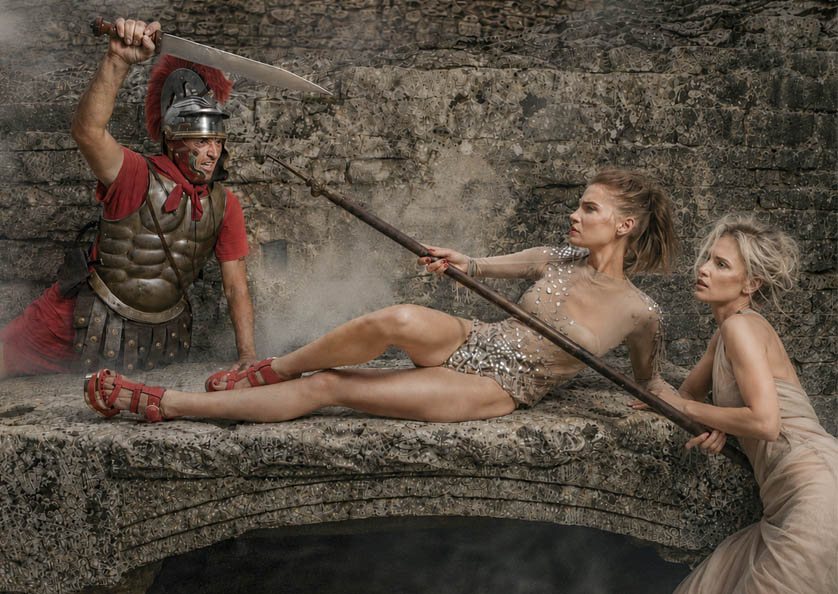
Creating one of the principal Lambertz calendar images inside a Roman amphitheatre — and recognising the opportunity to create an additional fashion editorial while the production was already in place.
Pula Arena is the sort of location that can dominate a photograph before the photographer has made a single decision. The stone, scale, repeating arches and extraordinary history of the Roman amphitheatre already provide enormous visual authority. That can be an advantage, but it can also become a problem.
This day formed part of the wider Lambertz European calendar production, and our objective in Pula was very clear: we needed to create one finished calendar image inside the arena.
That photograph had to work completely on its own. It could not depend upon the viewer understanding the wider production, seeing another image first or knowing what happened afterwards. Everything needed to resolve within a single frame.
An extraordinary location does not automatically create an extraordinary photograph. In fact, the stronger the environment becomes, the easier it is for the photographer to surrender control to it.
A model positioned in front of remarkable architecture may create an impressive record of the location, but that is not necessarily the same thing as creating a strong fashion photograph.
A remarkable location doesn't automatically make a remarkable photograph. You still have to decide what the picture is about.James Nader
Building the Calendar Image
I began by looking at how the figures could sit within the architecture and how the eye would move through the scene. There were already several elements competing for attention: the models, styling, Roman character, gesture, movement and the arena itself.
The more information you put into a photograph, the more important hierarchy becomes.
I wanted the central model to remain the visual anchor while everything around her created tension and movement. The Roman figure introduced another level of narrative. The second model created a counterbalance within the composition, while the architecture contained the scene and established its scale.
None of those elements could simply coexist. They needed to feel as though they belonged to the same picture.
This is where photography becomes less about adding and much more about organising. I tend to begin with the overall composition and then work progressively inwards: the relationship between the figures, their position within the environment, the light, expression, gesture and finally the smaller adjustments that allow the frame to resolve.
Photography is a sequence of decisions.
Composition affects subject. Subject affects light. Light changes tone. Gesture changes balance. Expression can completely alter the emotional weight of the frame.
The camera records those decisions, but the photograph begins before the shutter is pressed.
The finished frame makes the process appear simple, but a photograph like this is built from a series of small decisions. Position, scale, gesture, expression and the relationship between the figures all had to settle into the architecture without becoming overwhelmed by it. The arena was never intended to be a backdrop alone; it needed to become part of the structure of the image.
The Photograph the Day Had to Deliver
Whatever else happened while we were working inside Pula Arena, there was one photograph the day absolutely had to produce: the calendar image. Commercial photography requires that distinction.
There can be experimentation, unexpected ideas and photographs that appear simply because something changes in front of the camera. But those possibilities cannot be allowed to distract from the principal reason the production exists.
The commissioned image had to be secured first.
I have always found that creative freedom becomes much more useful once I know that essential photograph exists. Before that point there is responsibility. Afterwards there is opportunity.
And Pula offered a considerable opportunity.
The editorial was the opportunity.
The order mattered. Secure what must exist first. Then look again at what the production is giving you.
Recognising the Second Opportunity
Once the principal calendar photograph was secured, I could look at the arena differently.
We already had access to one of the most extraordinary locations on the European production. The models were ready. Wardrobe and styling were in place. The team was assembled and the practical infrastructure required to make the photographs already existed.
Starting an entirely separate international fashion shoot would normally mean repeating much of that organisation, time and expense. In Pula, almost everything necessary was already around us.
The question therefore became very simple.
What else can this location give us?James Nader
That question changed the remainder of the day.
Rather than continuing to create variations of the same calendar photograph, I began moving around the arena and looking for completely different relationships between the models and the architecture.
The commission had created the circumstances. The fashion editorial came from recognising their potential.
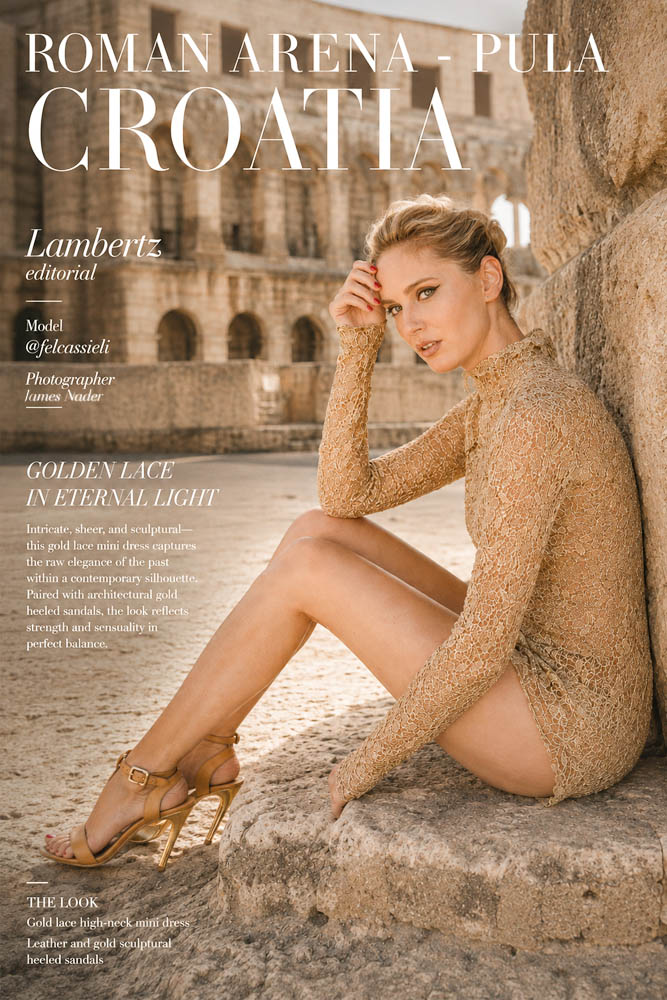
Fashion Editorial — Pula, Croatia
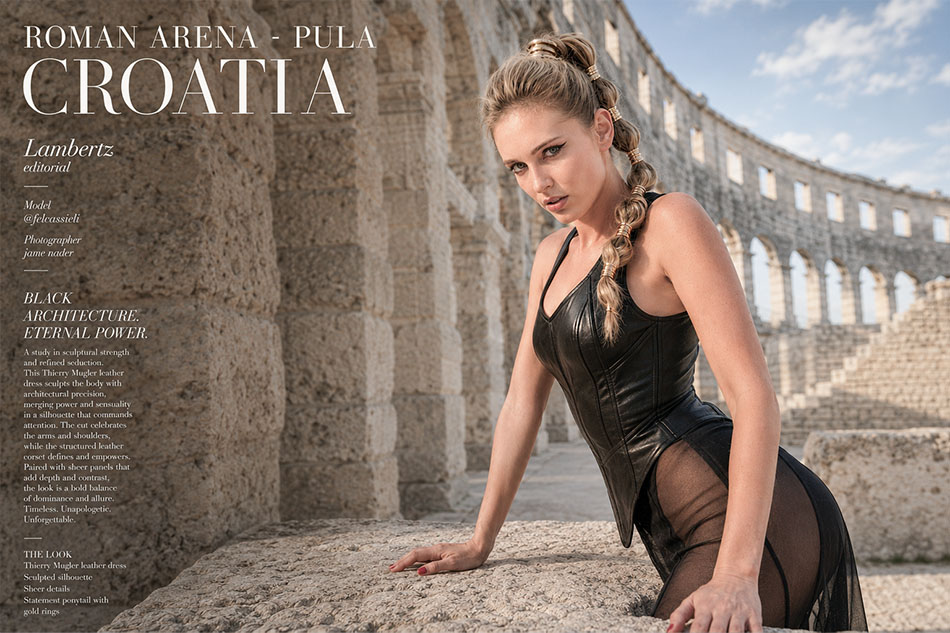
Once the principal calendar image had been secured, the arena became a different kind of photographic opportunity. The separate editorial sequence explores the models, styling and architecture with greater freedom.
View the Pula Fashion Editorial →Creating the Fashion Editorial
The editorial could operate differently from the principal calendar image. It did not need every photograph to carry the entire story.
A single calendar image has to resolve independently. Editorial photography can develop across a sequence. One frame can establish scale, another can concentrate on styling, another can be about movement or expression, while another may reduce the environment almost completely.
That gave me greater freedom to explore the arena.
Different areas of Pula created different qualities of light, texture and scale. A model could dominate one frame and become comparatively small against the architecture in another. Angles that would have complicated the principal calendar composition suddenly became interesting.
The challenge was retaining contemporary fashion energy within such a historically powerful environment.
I did not want the photographs to become costume photography simply because we were working inside a Roman amphitheatre. The arena already supplied the history. The models, styling, movement and attitude needed to bring the images back towards fashion.
Let the Location Serve the Photograph
Impressive locations can become a trap. When the environment is extraordinary there is a temptation to continually prove where you are: another wide photograph, another arch, another monumental view.
Eventually the photographer can begin documenting the place rather than making photographs within it.
I prefer to treat a location as another component of the composition.
Sometimes it should dominate. Sometimes it should support the subject. Sometimes a very small amount of architectural information is enough to tell the viewer where the photograph exists.
The better question is not how much of this location can I show?
It is:
How much of this location does the photograph actually need?
That shift changes the way you work. The location stops being the subject simply because it is impressive and becomes another decision within the image.
The location gives you possibilities. The photographer still has to recognise which ones matter.James Nader
Behind the Shoot
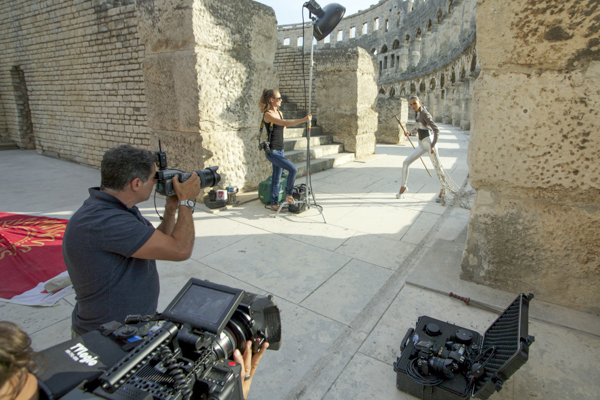
The finished photograph is remarkably good at concealing the circumstances surrounding its creation.
The crew disappears. Equipment disappears. The waiting disappears. Wardrobe adjustments disappear. Conversations, changes and the people standing immediately outside the frame disappear.
What remains is the photograph.
That is exactly as it should be.
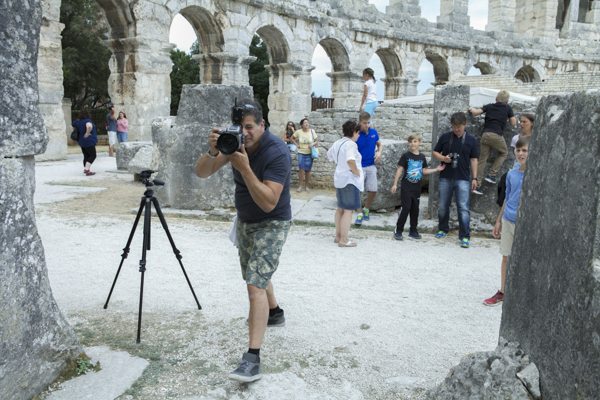
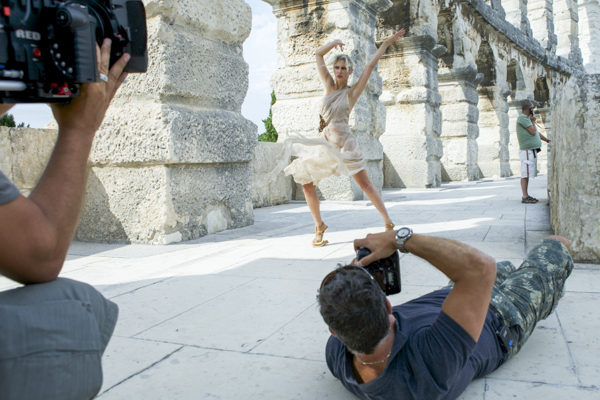
The behind-the-scenes photographs from Pula reveal another layer of the production. They show something of the scale of the arena, the people involved and the practical working environment surrounding the carefully controlled finished frame.
For me, this is where BTS photography becomes useful. It is not simply evidence that a photographer was present. It reveals some of the process that the final photograph deliberately hides.
The image is the result. Production is the process that makes that result possible.
Secure the commissioned image first. Then explore what the production makes possible.
If I had concentrated on creating editorial material before the calendar photograph was secure, an additional creative opportunity could have compromised the principal commission.
That is not creative freedom. It is losing sight of the brief.
Once the required photograph existed, however, there was no reason to ignore what was still around us. We had access, models, styling, crew, architecture and ideas.
The editorial grew naturally from those circumstances.
What the Day in Pula Taught Me
The interesting lesson from Pula is not really about photographing inside a Roman arena.
It is about maintaining professional discipline while remaining open to creative opportunity.
A brief gives a production purpose. It identifies what absolutely needs to exist. But the brief does not necessarily define every photograph that can be made.
Once the essential work is complete, your attention can change.
You begin looking differently.
You stop asking only what you have been asked to photograph and begin recognising what the circumstances themselves are offering.
That is where experience becomes valuable.
You know which photograph has to exist. You recognise when it has resolved. And then you have enough confidence in what you have already produced to begin looking beyond it.
Then keep looking.
Sometimes the photograph you were commissioned to make creates the conditions for the photographs you did not yet know existed.
10 Takeaways for Photographers
The Pula shoot happened within an unusually impressive environment, but the principles behind it apply to almost any location photography or commercial commission.
Know what absolutely has to exist
Identify the principal deliverable before becoming distracted by additional possibilities.
Do not let the location make your decisions
An impressive environment is raw material. It does not remove the need for composition, hierarchy and intention.
Decide what matters inside the frame
Subject, environment, gesture and light cannot all demand equal attention. Establish visual hierarchy.
Secure the brief before you wander away from it
Exploration becomes much safer once the essential commercial photograph is complete.
Look again once the pressure changes
The moment the required image is secured, reassess the location. You may begin seeing possibilities that were previously irrelevant.
Use access intelligently
Locations, people, wardrobe, styling and production time have value. Consider what additional work can responsibly be created from them.
Move the camera, not simply the model
A different pose is not always a different photograph. Change viewpoint, scale and the relationship between subject and environment.
Allow the location to disappear
You do not have to prove where you are in every image. Use only as much environment as the photograph needs.
Recognise when the photograph resolves
Composition, light, gesture and expression eventually begin working together. Learning to recognise that point prevents endless unnecessary shooting.
Keep looking after you have the photograph
The required frame may complete the brief without necessarily completing the creative opportunity.
The Transformation
Apply this thinking to your own photography and the shoot stops being a checklist of photographs that need to be taken. Instead, you begin seeing a production as a collection of possibilities held inside a clearly defined objective.
The first question remains practical:
What must I deliver?
But once that question has been answered, a second one becomes possible:
What else can I recognise here?
That change creates a calmer and more deliberate photographer.
You make fewer meaningless frames because you understand the reason for making them. You become clearer about when the brief is safe. You begin using locations more intelligently and become more willing to change viewpoint, simplify the frame or pursue an idea once the commercial responsibility has been satisfied.
The transformation is from simply completing a shot list to recognising photographs.
That was the real lesson from the day inside Pula Arena.
Frequently Asked Questions
Where is Pula Arena?
Pula Arena is a Roman amphitheatre in Pula, Croatia. It is one of the best-preserved surviving Roman amphitheatres and one of the city's most recognisable historic landmarks.
Why was James Nader photographing at Pula Arena?
The Pula shoot formed part of a wider European calendar production for Lambertz. The primary objective was to create one of the finished calendar images inside the Roman arena.
Was the fashion editorial part of the original commission?
The principal requirement was the calendar image. The additional fashion editorial was created once the main image had been secured and the potential of the existing location, models, styling and production became apparent.
What is location fashion photography?
Location fashion photography places fashion within a real environment rather than relying entirely upon a studio. The photographer must control the relationship between the subject, architecture or landscape, composition and light.
How do you photograph fashion in a dominant architectural location?
Establish hierarchy first. Decide whether the subject or environment carries the photograph, then use only as much architecture as the composition requires.
What is the difference between a calendar image and a fashion editorial?
A calendar image generally needs to operate as a complete standalone photograph. A fashion editorial can develop across a sequence, allowing different images to contribute different parts of the visual story.
Why include behind-the-scenes photography?
BTS photographs provide context around the finished image. They can reveal the location, production scale, crew, equipment, styling and working environment that deliberately disappear from the final photograph.
What should a photographer secure first on a commercial shoot?
The principal commissioned deliverable should be secured first. Additional experimentation should not compromise the photograph the client commissioned.
How can a photographer make more use of an expensive location shoot?
Once the essential deliverables are complete, reassess the production. New viewpoints, changes of scale, styling, expression and the relationship between subject and environment may create a substantially different body of work.
What is the key lesson from the Pula Arena shoot?
Deliver what the commission requires first, then remain alert to the creative opportunities that the production has made possible.
One Day Within a Much Larger European Production
Pula was one chapter within the wider Lambertz European calendar project, moving through a series of locations and requiring the photography to adapt continually to changing architecture, landscapes, people and production demands.
Explore the Complete European Production →The editorial was the opportunity.”
No Comments